
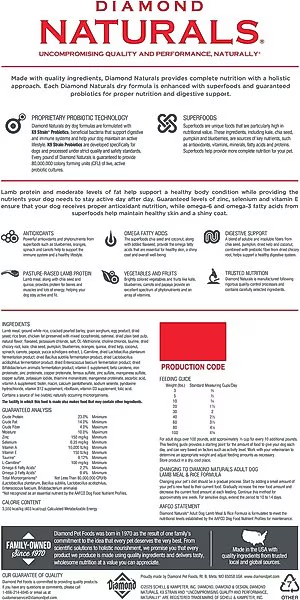
Lamb meal, ground white rice, cracked pearled barley, grain sorghum, egg product, dried yeast, rice bran, chicken fat (preserved with mixed tocopherols), oatmeal, dried plain beet pulp, natural flavor, flaxseed, potassium chloride, salt, DL-Methionine, choline chloride, taurine, dried chicory root, kale, chia seed, pumpkin, blueberries, oranges, quinoa, dried kelp, coconut, spinach, carrots, papaya, yucca schidigera extract, L-Carnitine, dried Lactobacillus plantarum fermentation product, dried Bacillus subtilis fermentation product, dried Lactobacillus acidophilus fermentation product, dried Enterococcus faecium fermentation product, dried Bifidobacterium animalis fermentation product, vitamin E supplement, beta carotene, iron proteinate, zinc proteinate, copper proteinate, ferrous sulfate, zinc sulfate, manganese sulfate, copper sulfate, potassium iodide, thiamine mononitrate, manganese proteinate, ascorbic acid, vitamin A supplement, biotin, niacin, calcium pantothenate, sodium selenite, pyridoxine hydrochloride, vitamin B12 supplement, riboflavin, vitamin D3 supplement, folic acid.
Contains a source of live (viable), naturally occurring microorganisms.
The facility in which this food is made also makes food that may contain other ingredients.
3,550 kcal/kg, 403 kcal/cup
| Crude Protein | 23.0% min |
|---|---|
| Crude Fat | 14.0% min |
| Crude Fiber | 4.0% max |
| Moisture | 10.0% max |
| Zinc | 150 mg/kg min |
| Selenium | 0.35 mg/kg min |
| Vitamin A | 10,000 IU/kg min |
| Vitamin E | 150 IU/kg min |
| Taurine | 0.12% min |
| L-Carnitine | 100 mg/kg min |
| Omega-6 Fatty Acids | 2.2% min |
| Omega-3 Fatty Acids | 0.4% min |
| Total Microorganisms | Not Less Than 80,000,000 CFU/lb |
Feeding Instructions
| Weight | Recommended Daily Feeding (cups) |
|---|---|
| 3 lbs | 1/3 |
| 5 lbs | 1/2 |
| 10 lbs | 3/4 |
| 20 lbs | 1 1/2 |
| 30 lbs | 2 |
| 40 lbs | 2 1/2 |
| 60 lbs | 3 1/3 |
| 80 lbs | 4 1/4 |
| 100 lbs | 4 3/4 |
For adult dogs over 100 pounds, add approximately ⅓ cup for every 10 additional pounds. For pregnant or nursing adult dogs, we recommend free-choice feeding. Adjust amount offered daily as needed to maintain ideal body condition. This feeding guide provides a starting point for the amount of food to give your dog each day. We recommend that you keep your dog in ideal body condition and not allow them to become overweight. The amount of food your dog needs can vary based on age, activity level or other food and treats given, so be sure to work with your veterinarian to determine an appropriate weight for your dog, and to make any necessary adjustments to their feeding.
Remember to keep plenty of fresh water available to your pet at all times.
When transitioning your pet to a new food, we recommend a gradual introduction of the new formula over a 7 day period. For pets with sensitivities, extend the transition period to 10 to 14 days. Start by adding a small amount of your pet’s new food to his or her current food. Gradually, increase the new food amount and decrease the current food amount at each feeding until you are feeding only the new food.


Reviews
There are no reviews yet.